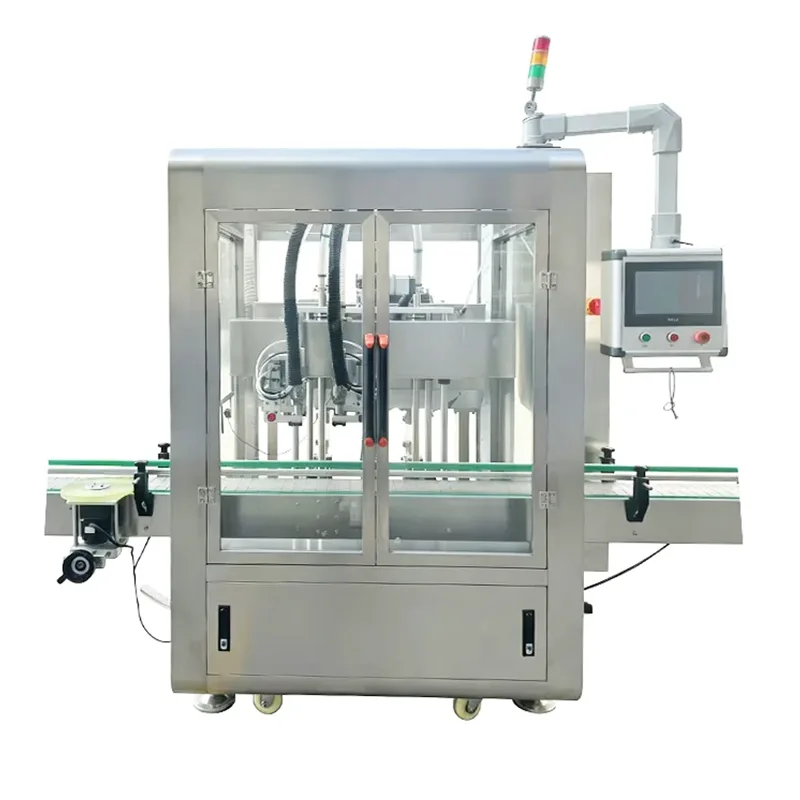
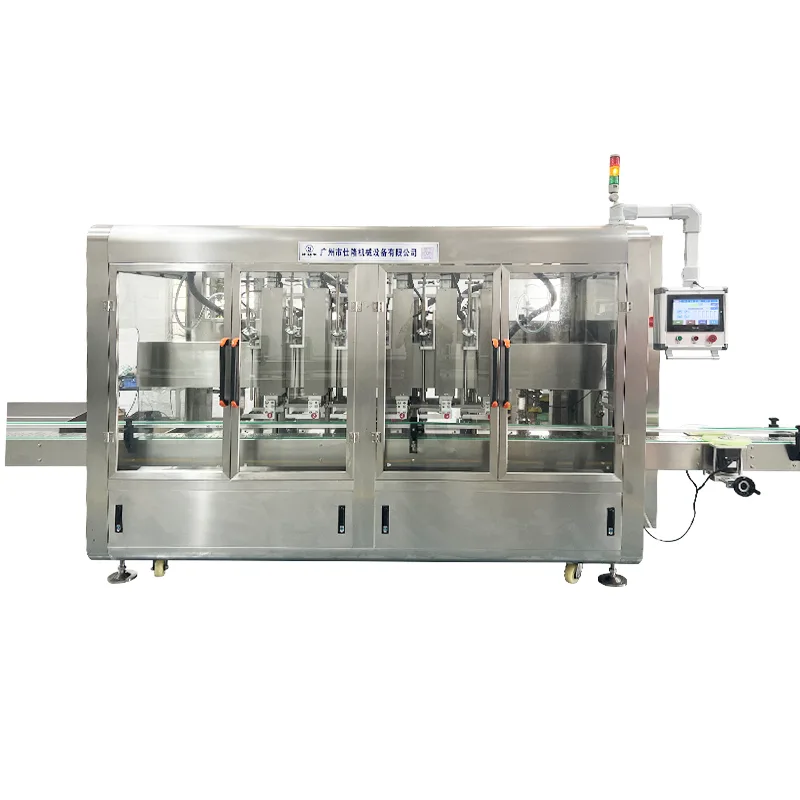
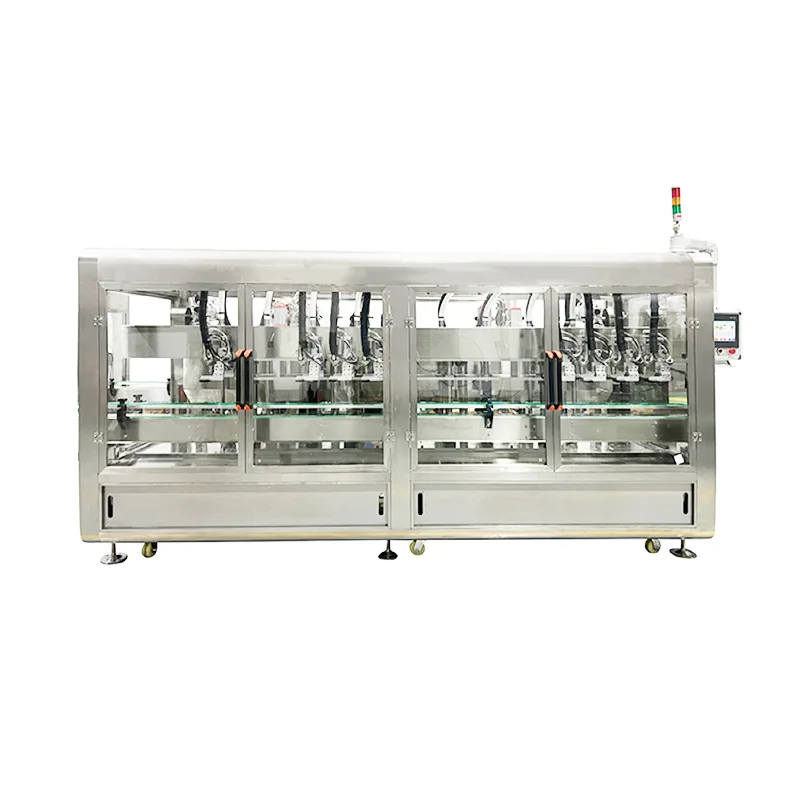
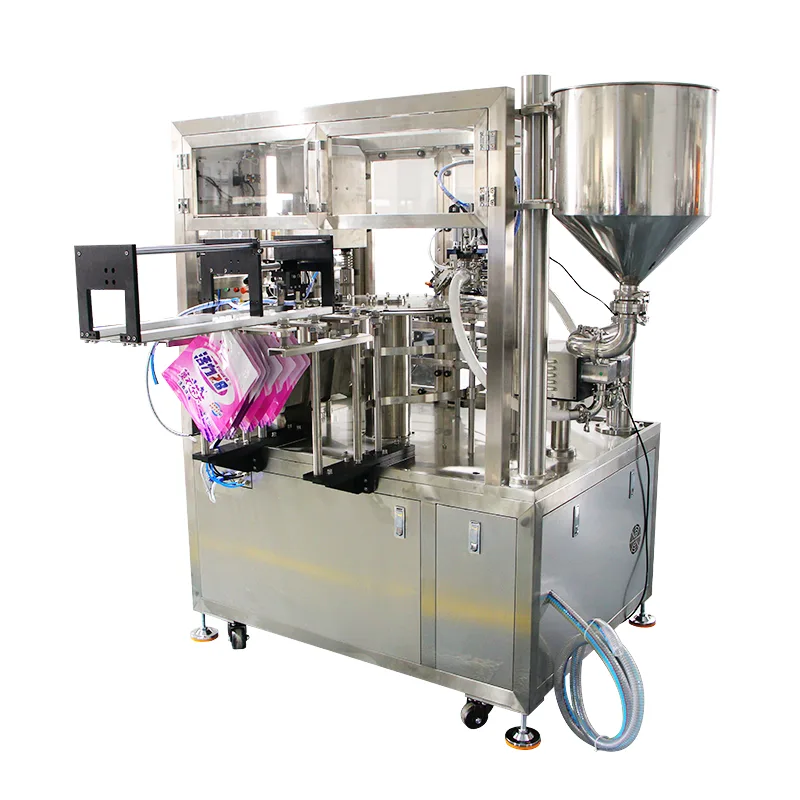
SOP: Standard Operating Procedure for 8-Head Tracking Filling Machine
Shilong Machinery
Core Features
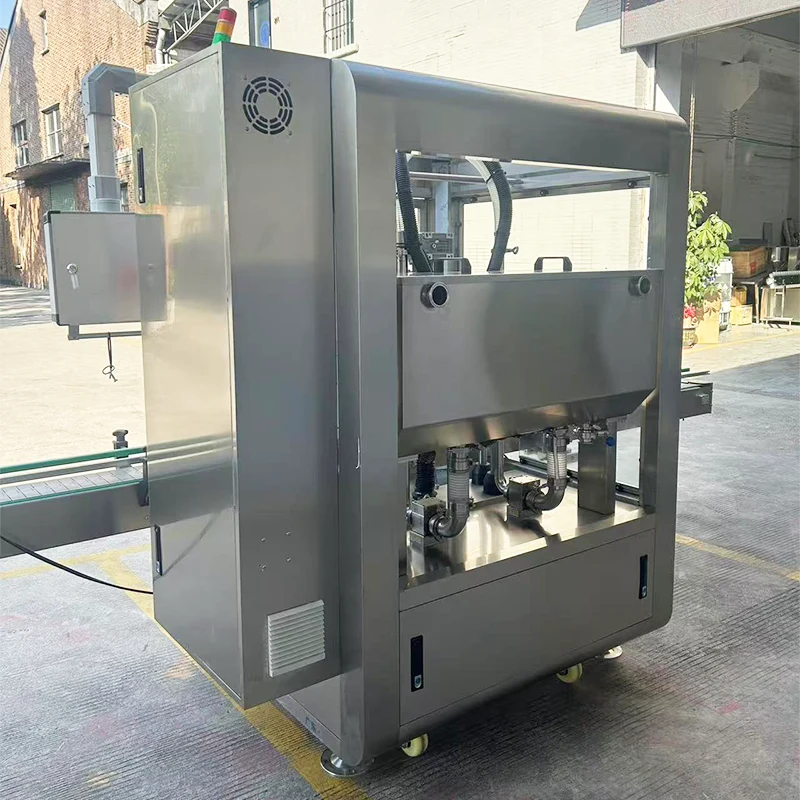
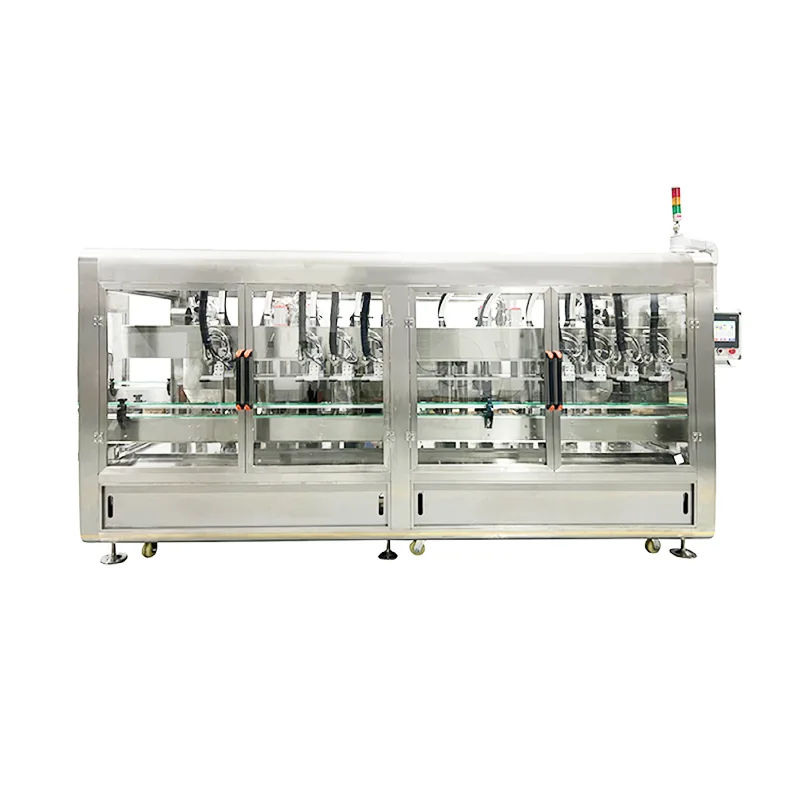
The key advantage of the tracking model lies in servo synchronous matching. Bottles keep moving on the conveyor, while filling heads travel together with bottles to complete filling. Compared with conventional stationary filling machines, the biggest operational difference is that operators must first calibrate tracking synchronization, photoelectric sensors and bottle clamping mechanism.
1. Pre-start Inspection (Safety First)
1. Confirm all emergency stop buttons are reset and safety guards are fully closed.
2. Air source: Compressed air pressure 0.4–0.7 MPa; no air leakage on air pipes.
3. Power supply: 380V three-phase power; reliable equipment earthing.
4. Pipeline: No leakage on material tank, feeding pipes, 8 pump bodies and filling nozzles; sealing rings intact.
5. Mechanics: No debris on conveyor belt; bottle clamps and servo slides move without jamming; photoelectric sensors clean and unobstructed.
6. Material: Fill raw material into the tank; inspect filters for blockages.
2. Power On, Homing & Manual Commissioning (Mandatory for Bottle Type Change)
1. Switch on main power, activate PLC, touchscreen and servo drives.
2. On the touchscreen, trigger servo homing; all 8 tracking slides return to origin.
3. Switch to Manual Mode, test each action separately:
- Conveyor start/stop, opening & closing of bottle clamping cylinders
✅ First Article Calibration: Run manual trial filling for 2–3 bottles, weigh and verify filling accuracy. If deviation is large, fine-tune metering parameters for each head on screen. Automatic production can start only after passing inspection.
4. Automatic Production Operation
1. After manual test and first article approval, switch to Automatic Mode.
2. Start conveyor. Bottles are continuously transported. Once photoelectric sensors detect 8 bottles in position, servo slides drive the 8 filling heads to synchronously follow moving bottles forward.
3. Tracking cycle: Nozzle descends → start filling and lift gradually while filling → filling finished, suck back to cut off material.
4. Filling heads quickly return to origin, waiting for next batch of bottles. Conveyor runs nonstop.
5. Patrol inspection during production:
- Watch tracking motion; no collision with bottle mouth or nozzle scratching bottles.
- Weigh sampling every 10~15 minutes.
- Check dripping, foaming and bottle tipping.
- Listen for abnormal servo noise and check alarm codes.
- Maintain sufficient material in tank to avoid dry pump running.
Abnormal Handling: If bottle jamming, bottle collision or out-of-tolerance accuracy occurs, press emergency stop immediately. Troubleshoot before restarting. Do NOT force continuous operation.
5. Shutdown Procedure (Normal Production End)
1. Stop feeding first, finish filling remaining bottles on conveyor.
2. Switch to manual mode, stop conveyor and filling pumps.
3. Empty material inside pipelines and pumps.
4. For material change / cleaning: Dismantle filling heads, pump bodies and hoses. Conduct CIP cleaning or disassembly cleaning (mandatory for food & daily chemical products).
5. Reassemble components after cleaning.
6. Switch off servo system and touchscreen, then cut off main power and air supply.
6. Common Alarms & Simple Troubleshooting
1. Servo tracking overtravel: Tracking travel parameter set too large, or photoelectric sensor offset. Check photoelectric sensor and revise tracking range.
2. No-bottle alarm: Dirty photo eye or incorrect bottle spacing.
3. Inconsistent filling volume: Worn pump seals, unstable feeding pressure, or uncalibrated individual head parameters.
4. Dripping & stringing: Insufficient suck-back volume. Increase suck-back value; extend suck-back time for high-viscosity sauces.
5. Bottle tipping: Improper bottle clamping pressure, or mismatch between conveyor speed and tracking speed.
7. Safety & Maintenance Guidelines
- Never reach hands into moving filling zone while machine is running.
- Power and air supply must be disconnected before cleaning.
We are a professional manufacturer of packaging machinery integrating research, design, development and manufacturing. As a factory from China, we integrate high-quality resources and adopt advanced technology. With premium equipment, rich experience and professional service, we provide custom packaging machinery for customers. We have a complete system covering R&D, production, sales and after-sales service.
We specialize in manufacturing packaging & food machinery: bottle rinsers, capping machines, labeling machines, sleeve labeling machines, sealing machines, emulsifiers / mixing tanks, water treatment systems, customized full-automatic & semi-automatic filling production lines and related equipment.
We adhere to the principle of quality assurance, reputation priority and thoughtful service. We strive to deliver customized products and all-round services for global customers.
We use cookies to offer you a better browsing experience, analyze site traffic and personalize content. By using this site, you agree to our use of cookies. Privacy Policy