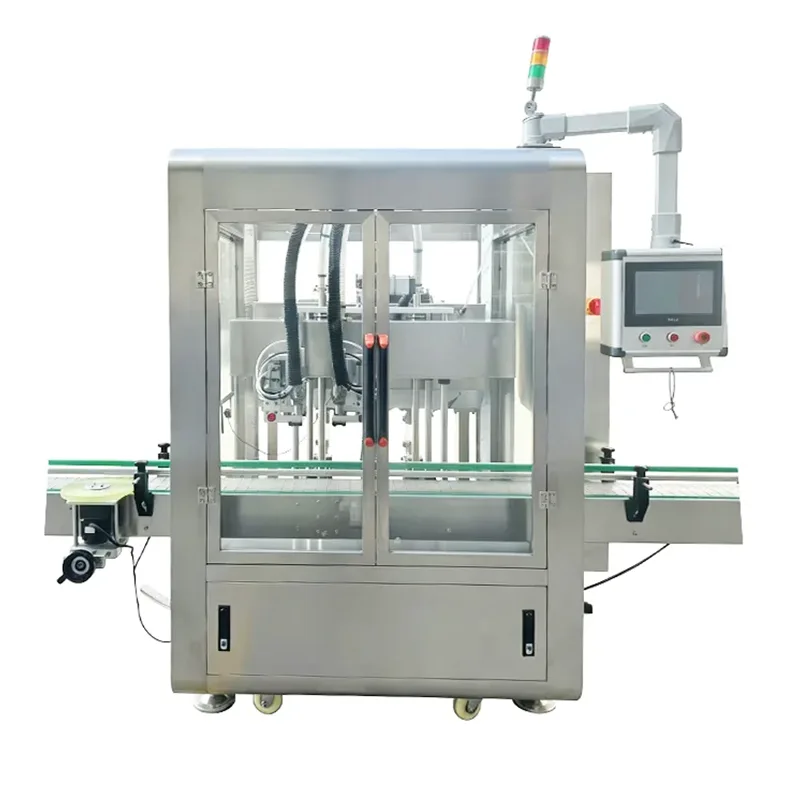
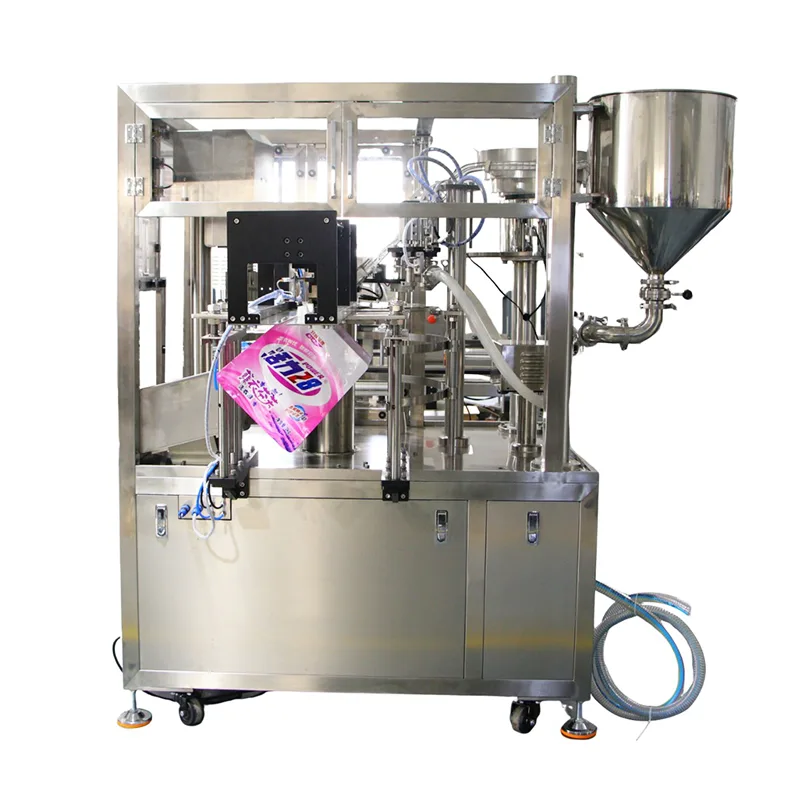
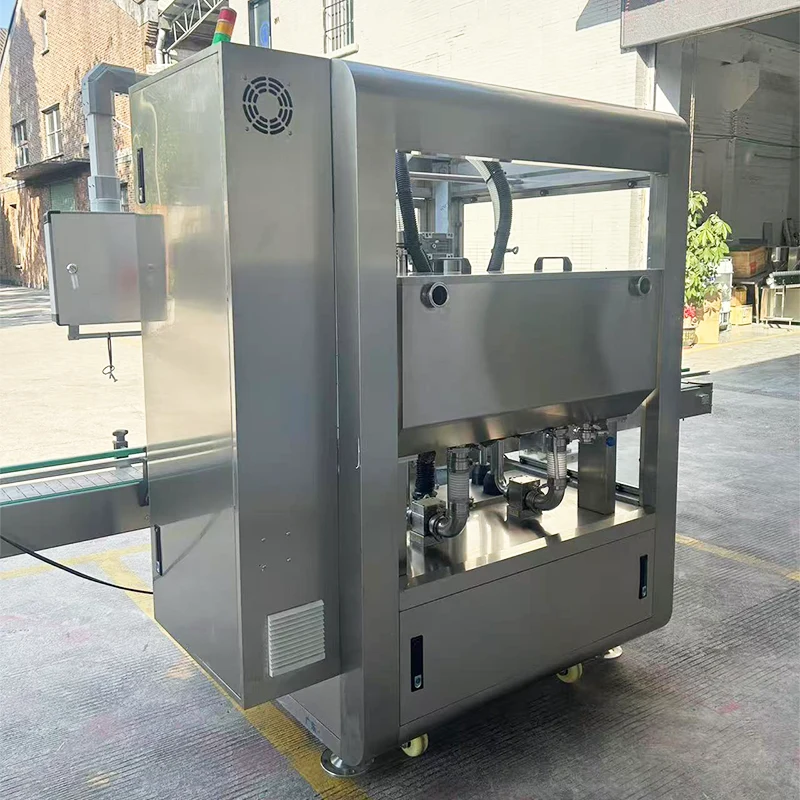
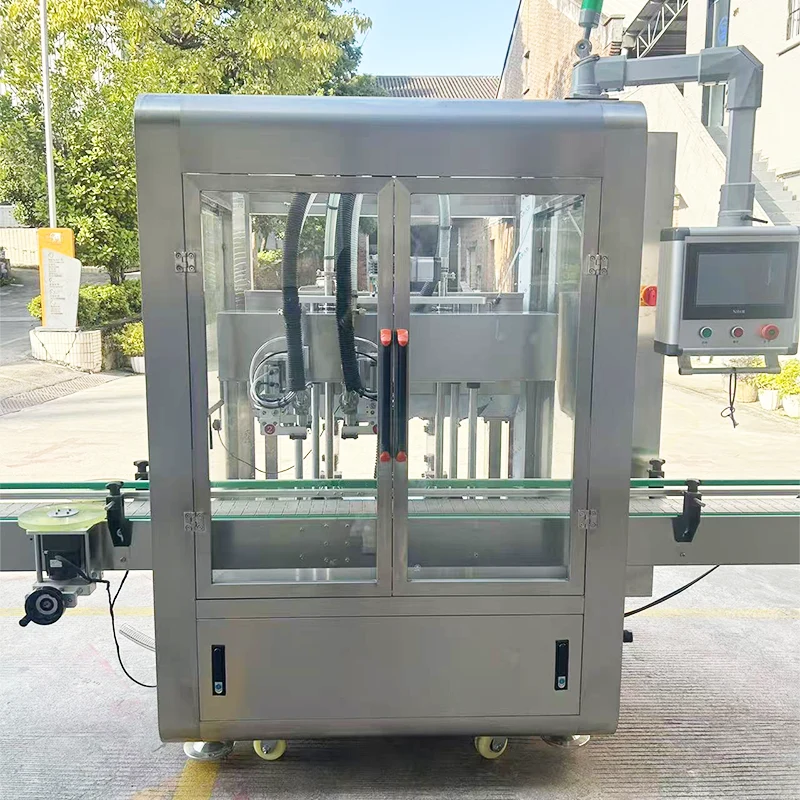
As a reliable manufacturer, factory and professional supplier based in China, Shilong Machinery will walk you through its full operating flow.
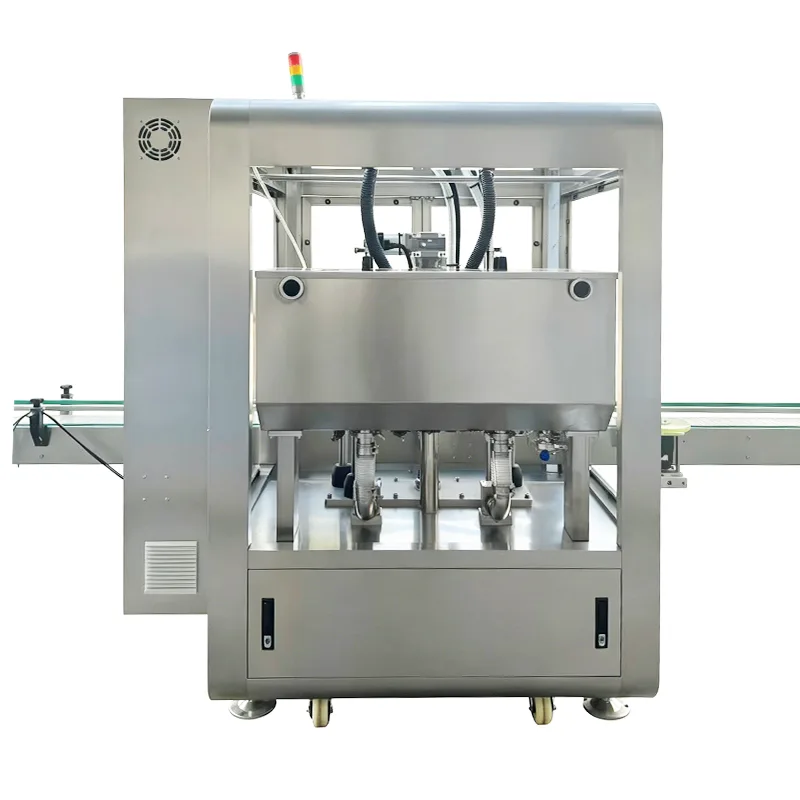
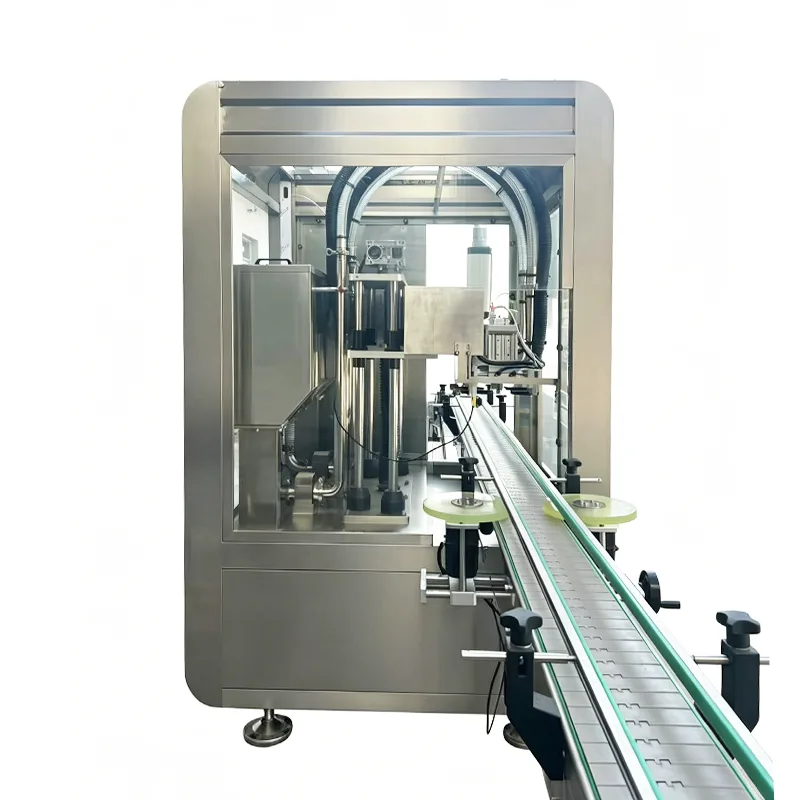
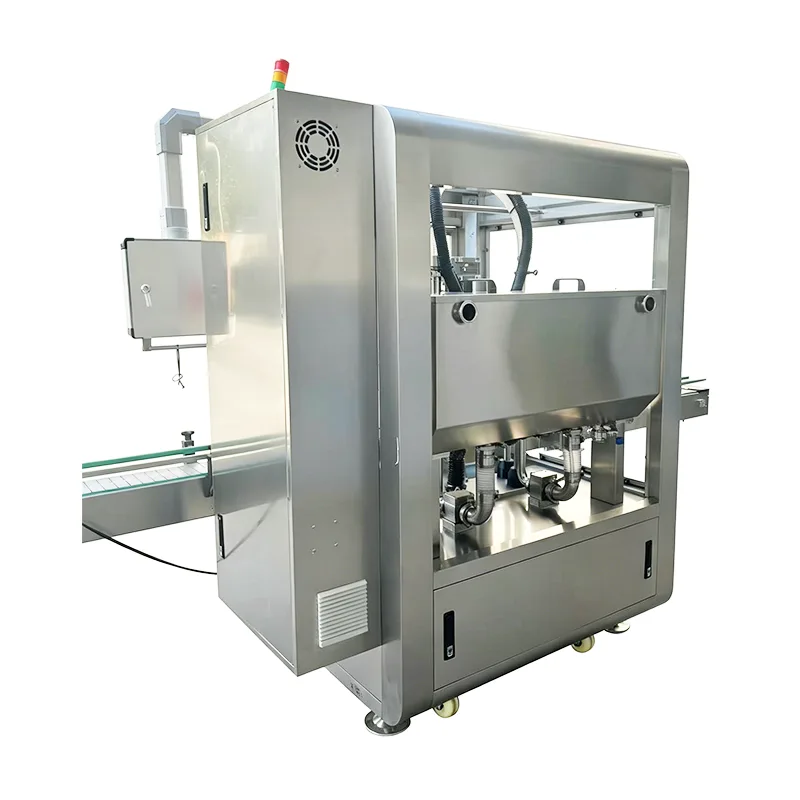
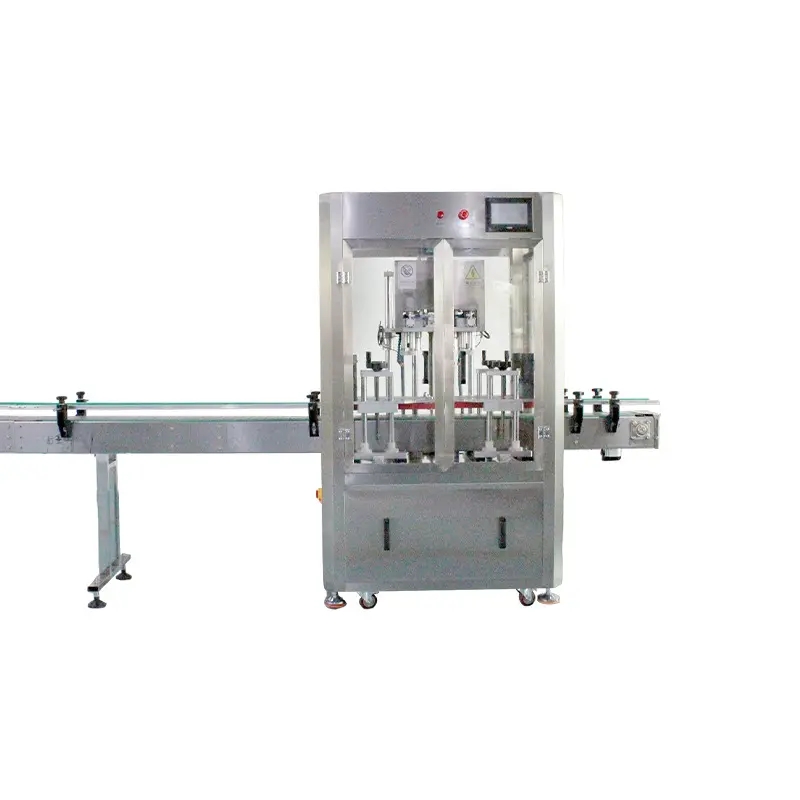
The whole closed‑loop operation consists of seven procedures: bottle feeding and separation, cap sorting and delivery, bottle positioning and clamping, automatic cap loading, servo‑driven capping, defective‑product inspection and rejection, and finished‑product discharge. All operations are automatically controlled by PLC and photoelectric sensors with zero manual operation.
1. Bottle Feeding and Separation
Filled bottles delivered from the front‑end filling machine are conveyed onto the feeding belt at a constant speed.
Limit guardrails on both sides align bottles to keep them transported along the center line.
Bottle‑separating cylinders or screw separators space out clustered bottles for independent conveyance.
Photoelectric sensors detect bottles in real‑time. The machine suspends cap‑dropping and capping actions when no bottle is detected to prevent material waste caused by missing caps.
2. Cap Sorting and Delivery (Matched with Vertical Cap Sorter)
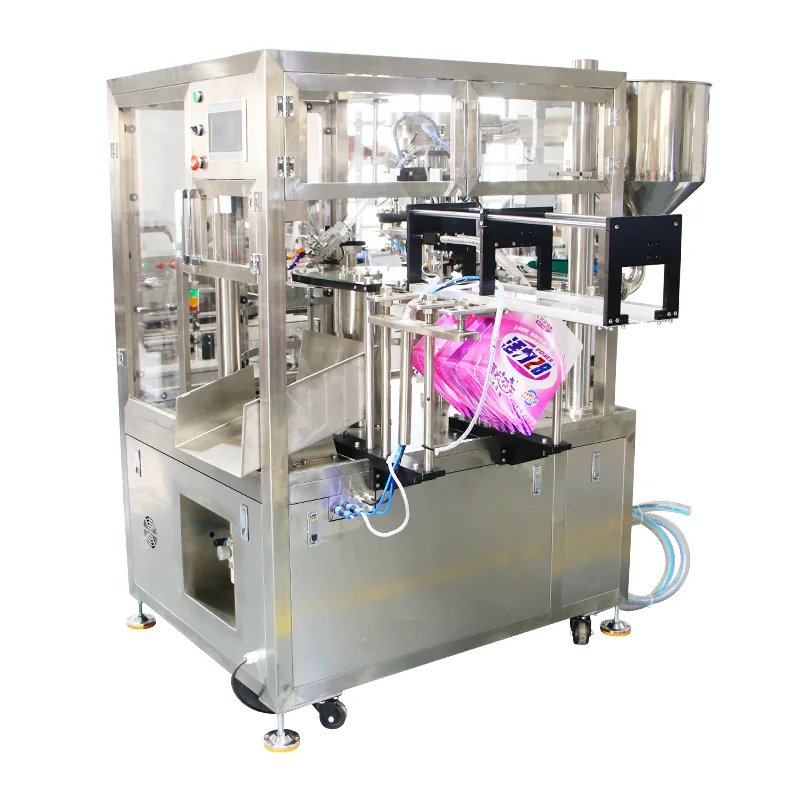
Workers pour batches of caps into the storage hopper at one time.
Vibrating elevator trays and screening tracks rapidly distinguish right‑side‑up and reversed caps.
Upside‑down caps fall back to the hopper for re‑screening. Only qualified caps with the opening facing down slide into the delivery chute.
A cap‑storing station is arranged at the chute outlet. A photoelectric sensor monitors residual caps. The machine triggers audible‑visual alarms and pauses for refilling once the hopper runs out of caps.
3. Bottle Positioning and Clamping
When bottles reach the capping station, the blocking cylinder stretches out to halt bottles.
The bottom bottle‑support cylinder rises while clamps on two sides fasten the bottle tightly, stopping it from slipping or spinning during capping.
A positioning‑completion signal is sent to the control system to enable cap dropping.
4. Automatic Cap Loading
The blocking cylinder on the delivery chute opens, releasing one cap to fit accurately over the bottle mouth.
A buffered pressing head lightly presses the cap to avoid offset and tilting.
A secondary photoelectric inspection skips the capping process for misplaced or tilted caps, which will be rejected afterwards.
The servo‑controlled capping head descends, with silicone jaws firmly gripping the cap.
The servo motor tightens the cap under preset torque with real‑time closed‑loop torque monitoring.
The servo motor stops instantly once the target torque is reached, preventing bottle‑mouth cracking and cap scratches from over‑tightening.
The capping head lifts after tightening. Bottle clamps and the blocking cylinder reset.
An overload protection system activates alarms and emergency‑stops the machine for jammed or slippery caps to avoid equipment damage.
6. Defective‑Product Inspection and Rejection
Bottles pass multiple groups of photoelectric detectors for cap existence and cap‑height inspection (used to identify loose or slippery caps).
Defective items with missing, tilted or loose caps are pushed into the waste‑collection box by the rejection cylinder at the discharge station.
Qualified bottles move on to the next working procedure.
7. Finished‑Product Discharge
Qualified bottles return to the main conveyor belt and are delivered to subsequent machines such as labellers and case packers, completing the full packaging assembly‑line loop.
Process Differences of the In‑line Roller‑Type Automatic Capping Machine (Economical Model)
This model dispenses with the stationary bottle‑clamping station and finishes capping while bottles keep moving.
Caps fall onto bottle mouths continuously during transportation.
Two or four rubber friction rollers grip caps and spin them tight by the forward‑moving friction of bottles.
Tightening force is controlled by spring pressure instead of high‑accuracy servo torque control.
Other procedures including feeding, cap sorting, low‑cap alarms, defect detection and discharging stay the same as the servo‑driven model.
Extra Procedures for the Vacuum Automatic Capping Machine (Specially‑Used for Glass Sauce Jars)
A vacuum chamber is added in the capping stage.
After bottles are sealed and positioned, air inside the chamber is extracted to form negative pressure. Caps are then tightened under vacuum to achieve air‑tight sealing and prolong the shelf‑life of sauces and canned food.
general Automation Logic
All movements are synchronised by the PLC with interlocked photoelectric sensors, air cylinders and servo motors.
Functions including cap suspension for empty stations, low‑cap alarms, bottle‑jam emergency stop and torque overload protection support round‑the‑clock unattended operation linked with filling production lines.
Shilong Machinery, a top‑tier factory, experienced manufacturer and trusted supplier located in China, specialises in the research, design, development and production of packaging‑grade machinery.
We absorb advanced domestic and overseas technology and integrate premium resources. With sophisticated equipment, rich manufacturing experience and professional services, we supply custom‑built packaging machines for clients worldwide.
Our main products include fully‑automatic and semi‑automatic filling production lines, bottle washers, capping machines, labelling machines, sleeve labellers, sealing machines, emulsifying mixing kettles, water‑treatment equipment and other food and packaging machinery.
We adhere to strict quality standards, good faith and considerate service, providing personalised equipment and all‑round services for global customers.
We use cookies to offer you a better browsing experience, analyze site traffic and personalize content. By using this site, you agree to our use of cookies. Privacy Policy