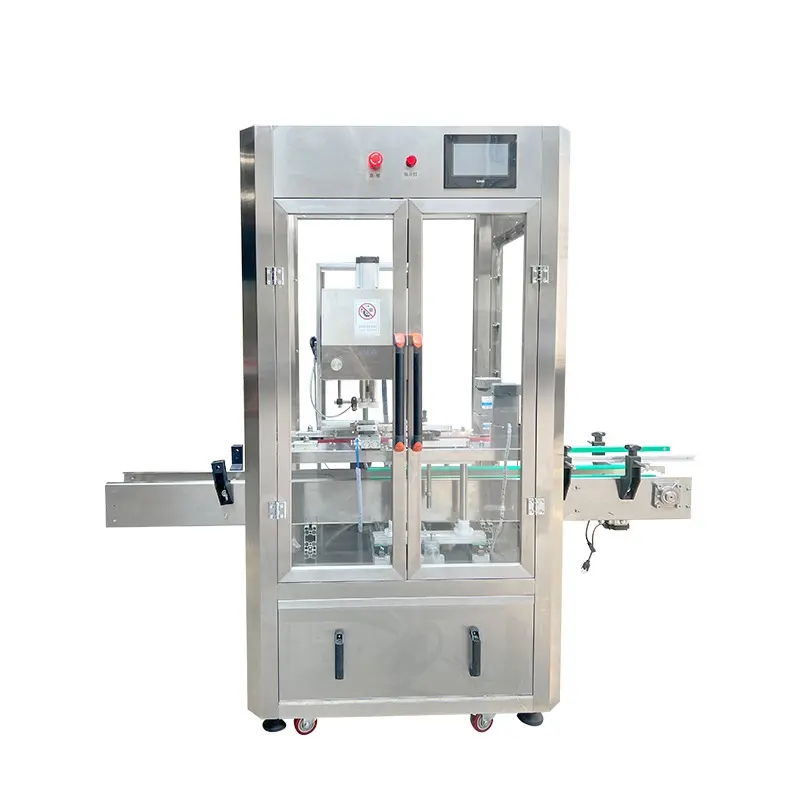

Shilong Machinery: Key Points for Choosing an Automatic Capping Machine Factory & Common Pitfalls to Avoid
Key Points for Selecting an Automatic Capping Machine Manufacturer & Common Pitfalls to Avoid
Ⅰ. Step 1: Screen Reliable Suppliers and Distinguish Between Source Factories and Middlemen
Characteristics of a Reliable Source Factory
1. Equipped with self‑owned sheet‑metal workshops, assembly production lines and CNC processing equipment, instead of simply assembling outsourced spare parts.
2. Proven industry‑related cases: Preferably production cases with the same bottle caps and bottle shapes as your products (daily‑use chemicals, sauces, pharmaceuticals, etc.).
3. Own utility‑model patents and software copyrights related to capping machines. Servo‑driven and vacuum capping machines are technically‑intensive products; manufacturers with independent R&D capabilities are preferred.
4. Ready to welcome factory audits and on‑site machine‑testing at any time, and capable of providing a complete configuration list as well as stainless‑steel material inspection reports.
⚠️ Warning Signs to Identify Middlemen & Private‑label Resellers
Low quoted prices, yet no in‑house equipment‑manufacturing workshop; they resell fully‑finished machines purchased externally.
On‑site machine‑testing is unavailable; only pre‑recorded videos from third‑parties can be provided.
No in‑house after‑sales engineers. Once faults occur, they have to contact upstream suppliers, leading to long maintenance cycles.
Procurement Suggestion for the Pearl River Delta Region: Prioritize local manufacturers in Guangzhou and Foshan. They deliver fast on‑site commissioning and after‑sales support, minimizing production‑downtime losses.
Ⅱ. On‑site Inspection & Machine‑Testing
Samples to Bring for Machine‑testing
Bring your real bottles and matching caps (at least 2‑3 sets). Do not test with the supplier’s standard sample bottles. Tiny dimensional tolerances of bottle caps may cause problems such as slipping, crooked caps, broken anti‑theft rings and liquid leakage.
Key Inspection Items During On‑site Testing
1. Run the machine continuously for 10‑20 minutes and check for defective issues: crooked caps, thread slipping, damaged anti‑theft rings, missed capping and cap jamming.
2. For servo‑controlled models: Modify torque values on‑site to verify accurate torque performance.
3. For vacuum capping machines: Check the vacuum‑sealing effect inside bottles after testing and inspect for bulging caps or air leakage.
4. Switch between large‑size and small‑size bottles to confirm quick‑changeover convenience and whether expensive extra fixtures need to be purchased separately.
5. Full‑production‑line linkage test: If you intend to connect the capper with a filling machine, make sure to test production‑beat matching and avoid bottle jamming or bottle dropping.
If the manufacturer refuses machine‑testing or rejects your sample‑testing request, eliminate them directly from your candidate list.
Ⅲ. Pitfall‑Avoidance for Equipment Configurations
1. Stainless‑steel Material Trap
Verbal promises of 304 stainless‑steel, while the main frame is actually made of rust‑prone 201‑grade steel, with only a small cover plate using 304 stainless steel.
✅ Solution: Specify in the contract that all parts in contact with bottle caps and containers shall be made of 304 stainless steel. 316L stainless‑steel material is required for pharmaceutical products and corrosive liquids. Request official material certification documents.
2. Electric‑control & Core‑component Trap
Low‑cost machines are often fitted with off‑brand servo motors, low‑end domestic PLCs and inferior torque sensors. Torque drift and unstable capping tightness may occur after half‑a‑year of operation.
✅ Solution: Ask the manufacturer to issue a detailed configuration list marking the brand and model of PLC, touch screen, servo motor and torque sensor. Attach this list as an annex to the formal contract.
Reference of Reliable Component Brands: Siemens, Mitsubishi, Delta, Weinview.
3. Overstated‑parameter Trap
The machine is marked with a production capacity of 60 bottles per minute, yet its stable actual output only reaches 35‑40 bottles per minute.
Nominal torque range: 0‑12 N·m, while actual torque error is excessively large.
✅ Solution: Take the stable‑running capacity over 30 consecutive minutes and measured torque error as acceptance criteria, and include these clauses into your purchase contract.
Ⅳ. Pitfall‑Avoidance for Quotation & Contract Sign‑up
1. Low‑price‑bait Trap
Suppliers submit quotations far below the market average, then charge extra fees afterwards: on‑site commissioning cost, freight, training cost, fixture cost, installation fee and software‑unlocking fee.
✅ Solution: Clearly state on the quotation: complete machine price, included spare‑parts list, whether on‑site installation & commissioning and freight are covered.
2. Vague Acceptance‑standard Risk
Many procurement contracts only state “the equipment shall run normally”. When low capping qualification rate or occasional thread‑slippage happens later, manufacturers may refuse after‑sales service by claiming no equipment fault exists.
✅ Mandatory acceptance indicators to be written into the contract:
1. Capping pass rate ≥ 99.5%
2. Torque error of servo‑driven machines: ±0.1‑0.2 N·m
3. Fault‑free continuous operation for 30 minutes under no‑load and material‑feeding conditions
4. Upper limit of defect rate caused by crooked caps or broken anti‑theft rings
3. After‑sales Terms Must Be Stated in Black and White
1. Complete‑machine warranty: Standard warranty period is 1‑year. Wearing parts (capping rubber rollers, conveyor belts) are excluded from free warranty. Provide a clear list of all wearing parts.
2. After‑sales response time: For local manufacturers in the Pearl River Delta, it is recommended to agree on 24‑hour on‑site engineer service. For non‑local suppliers, specify the response time of remote technical support.
3. Spare‑part price after warranty expiration: Request a quotation sheet of wearing‑consumable parts to prevent overpriced spare‑part charges in later periods.
4. Confirm whether lifelong free technical upgrades and remote commissioning guidance are provided.
Ⅴ. Model‑specific Pitfall‑avoidance Guidelines
1. Servo Torque Capping Machines (pump‑head caps, skincare bottles, pharmaceutical containers)
❌ Common trap: “Pseudo‑servo capping machines”. Though equipped with servo motors, these machines lack closed‑loop torque sensors. They can only adjust rotation speed rather than precisely control torque, essentially working as friction‑wheel cappers.
✅ Recommended configuration: Closed‑loop torque‑control system, with storable, adjustable torque values and exportable data reports.
2. Automatic Vacuum Capping Machines (glass sauce bottles)
❌ Common trap: Ordinary capping machines fitted with simple air‑extraction nozzles are falsely sold as vacuum cappers. Insufficient negative‑pressure inside bottles will result in bulging caps and product deterioration.
✅ Acceptance requirement: Test vacuum degree after machine‑testing to ensure qualified negative‑pressure sealing.
3. Dual‑head Follow‑up Capping Machines (high‑speed production lines)
❌ Common trap: Poor synchronization performance of follow‑up capping heads. The capper fails to catch‑up with bottles under high‑speed operation, frequently generating crooked caps. The conveyor‑belt beat mismatches the upstream filling machine.
✅ Before purchase: Provide the manufacturer with your full‑line layout drawing and conveyor‑speed parameters of the filling machine, so that a coordinated linkage solution can be prepared in advance.
Ⅵ. After‑sales & Risk‑control Checklist
1. Prioritize manufacturers with proven industry‑reference cases and customer‑visit verification documents. Exercise caution with suppliers unwilling to provide peer reference cases.
2. For export‑oriented orders: Notify your manufacturer in advance that CE certification is required, and equipment electrical configurations shall comply with international export standards to avoid costly retrofits later.
3. Reserve room for future production expansion: Leave a 20 % margin for bottle‑diameter range and production‑capacity during equipment selection, to ensure compatibility with new bottle specifications in the future.
Related Products: Filling Machine, Laundry Detergent Filling Machine, Lubricant Filling Machine, Liquid Filling Machine, Automatic Filling Machine, Shower‑gel Filling Machine
Guangzhou Shilong Machinery Equipment Co., Ltd.
Guangzhou Shilong Machinery Equipment Co., Ltd. is a professional manufacturer of packaging machinery integrating research, design, development and production. Committed to introducing advanced domestic and international technologies and integrating high‑quality resources, we supply custom‑tailored packaging equipment for clients with premium‑grade machinery, rich industry experience and professional services. Our company has built a complete industrial system covering product R&D, manufacturing, sales and after‑sales service.
We specialize in developing and manufacturing packaging machinery: bottle‑washing machines, capping machines, labeling machines, sleeve‑labeling machines, sealing machines, emulsifiers, mixing tanks, water‑treatment equipment, as well as customized fully‑automatic and semi‑automatic filling production lines and other food & packaging equipment.
Adhering to our corporate principle of quality‑orientation, reputation‑first and thoughtful service, we strive to deliver personalized products and all‑round support for global customers.
Related News
- Shilong Machinery’s Today Sharing: What are the advantages of the automatic spout pouch filling and capping machine?
- Shilong Machinery: How to Choose a Suitable Paste Filling Machine
- Shilong Machinery Today’s Sharing: On-site Commissioning Checklist for Weighing Filling Machine
- Shilong Machinery Sharing Today: How to Select an Automatic Capping Machine
- Shilong Machinery: Detailed Technical Explanation of Dual‑Head Tracking Filling Machine
- Shilong Machinery Tips: Daily Maintenance for Liquid Filling Machines
Leave me a message