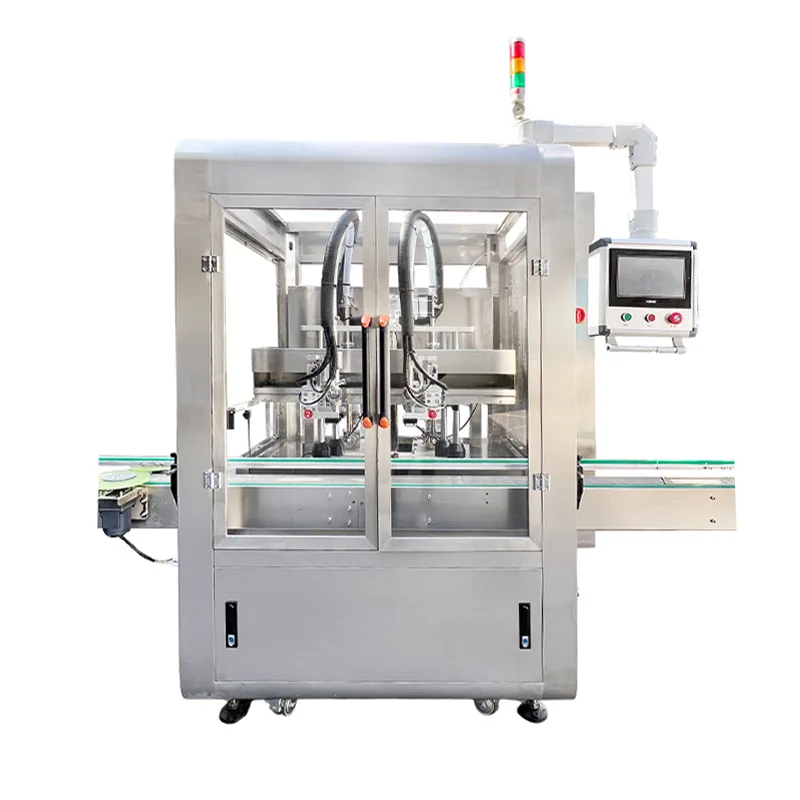
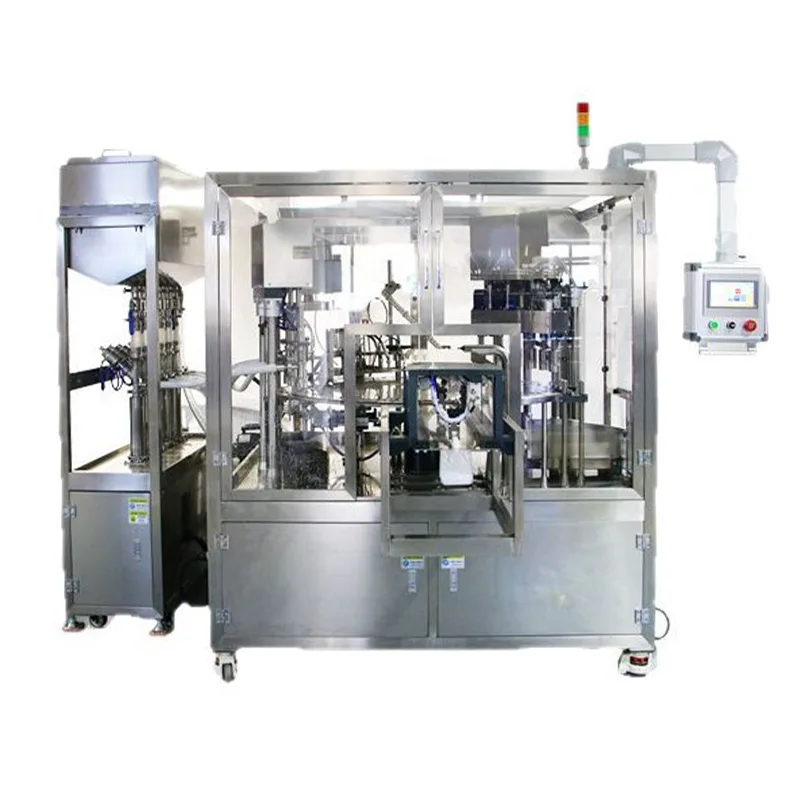
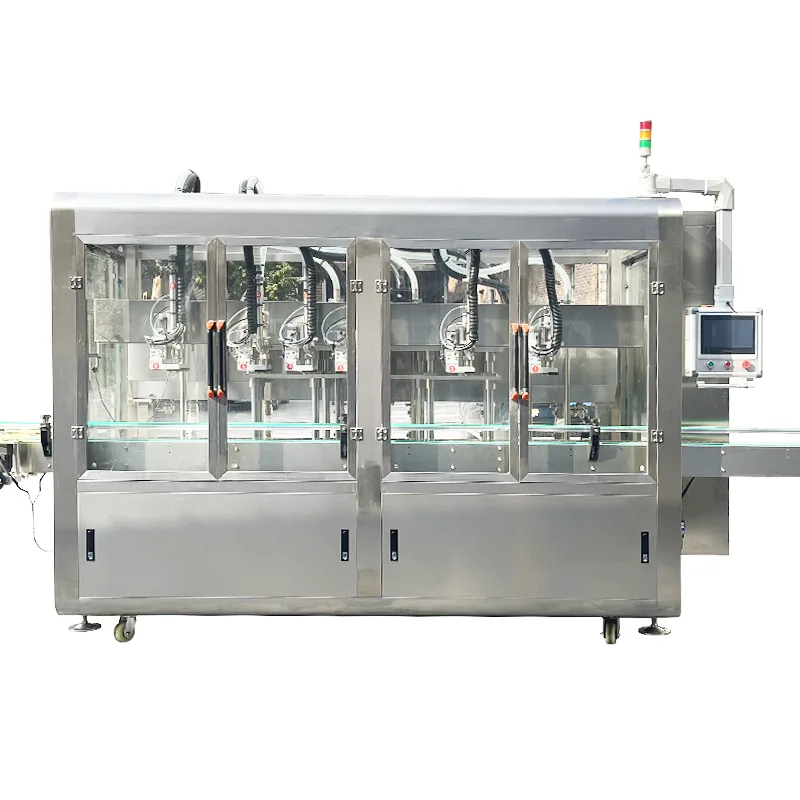
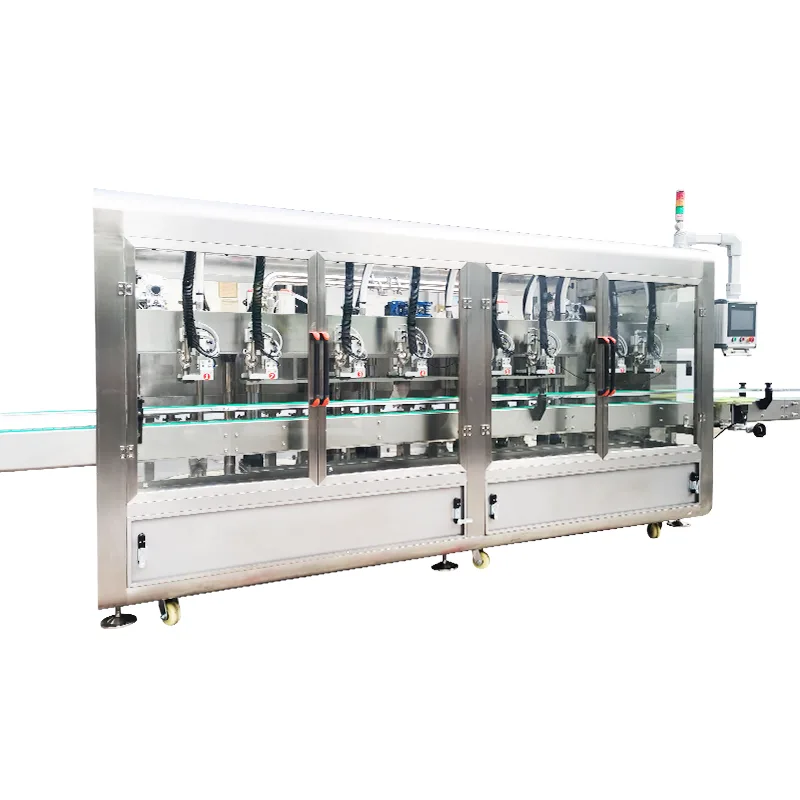
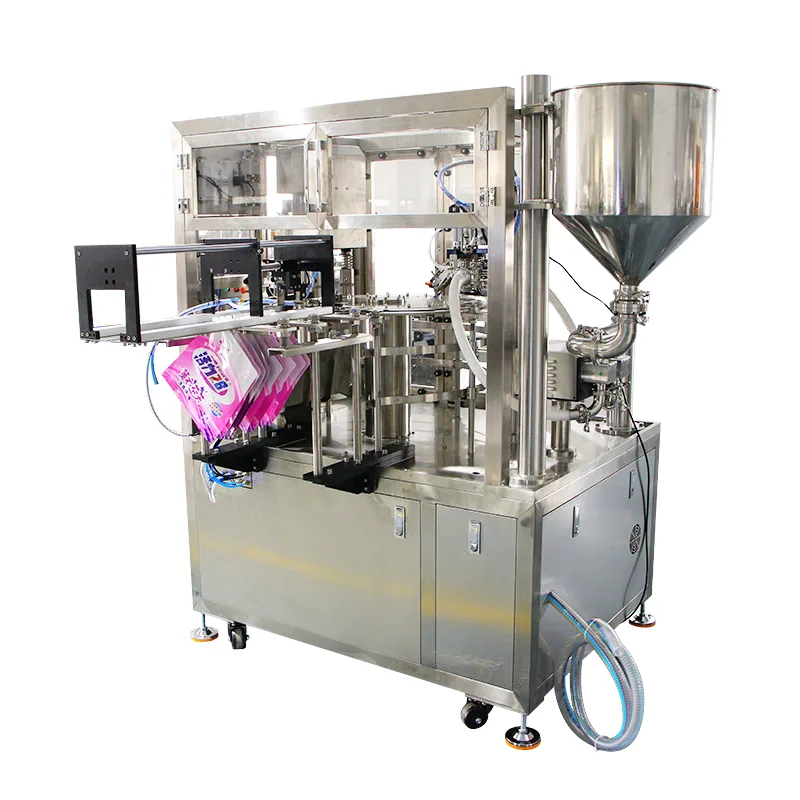
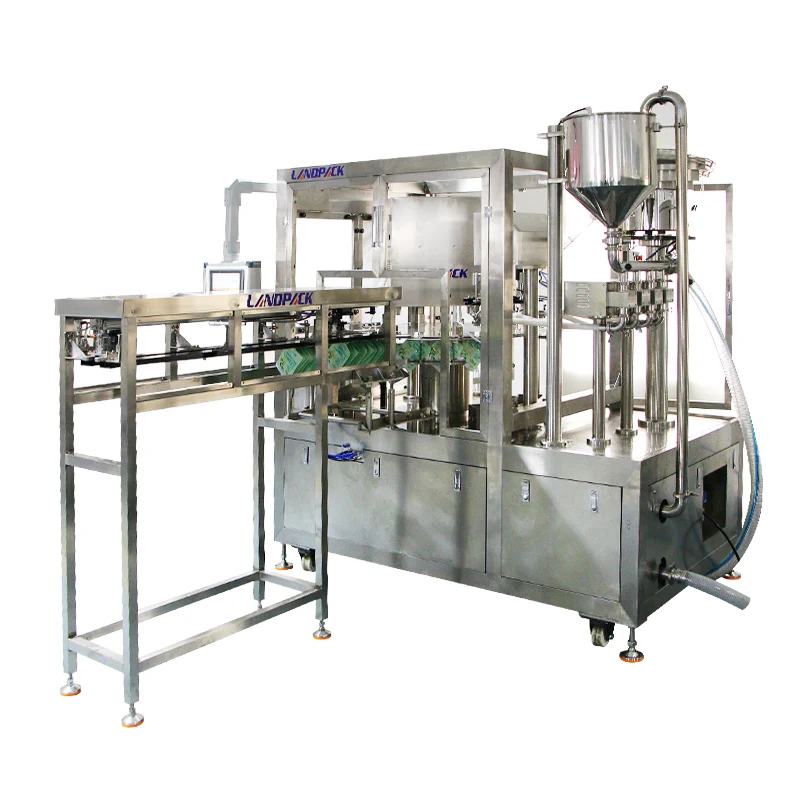
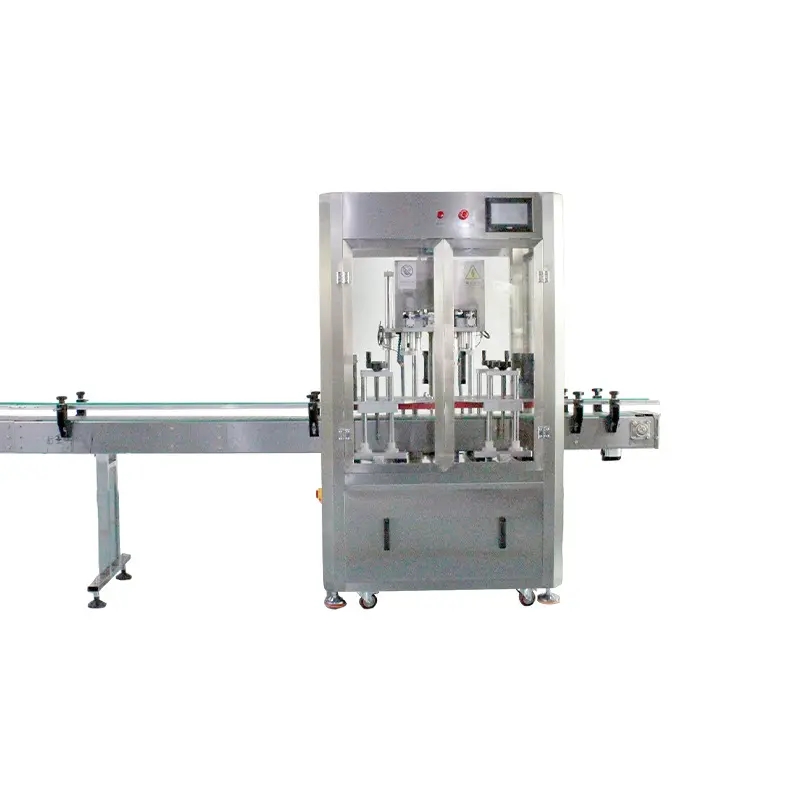
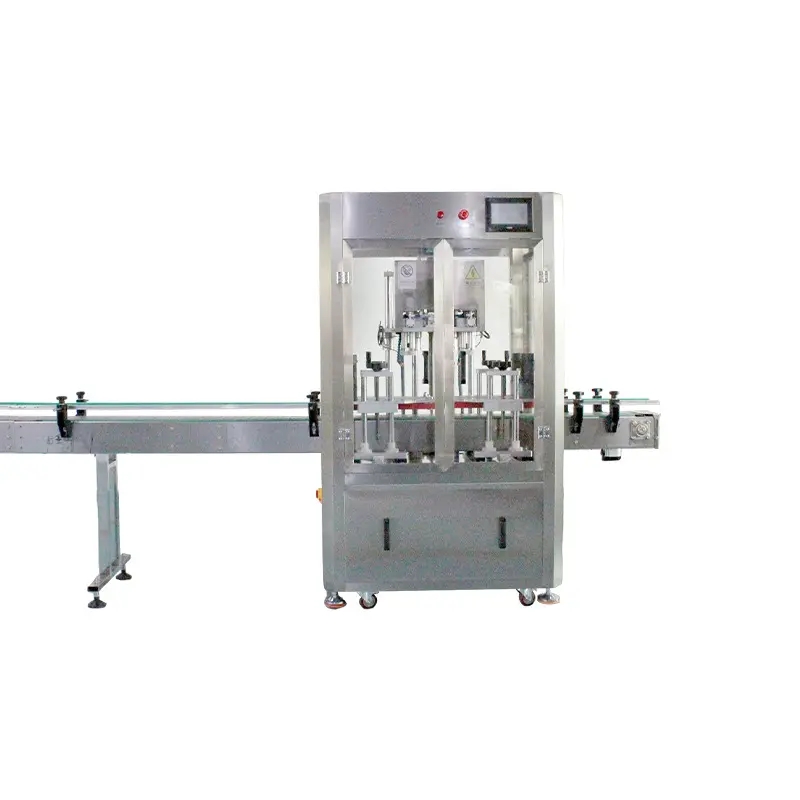
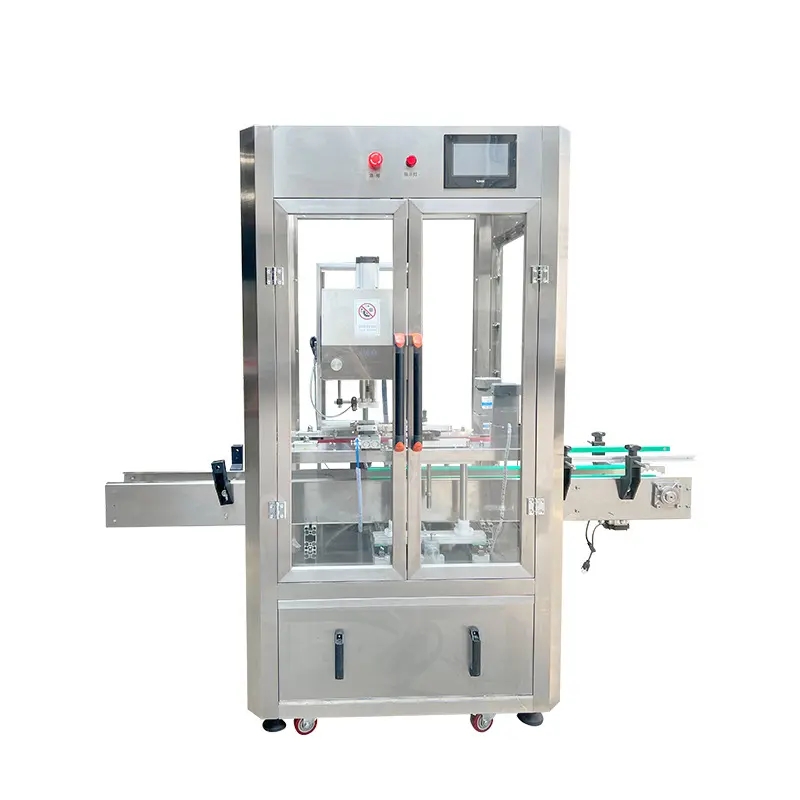
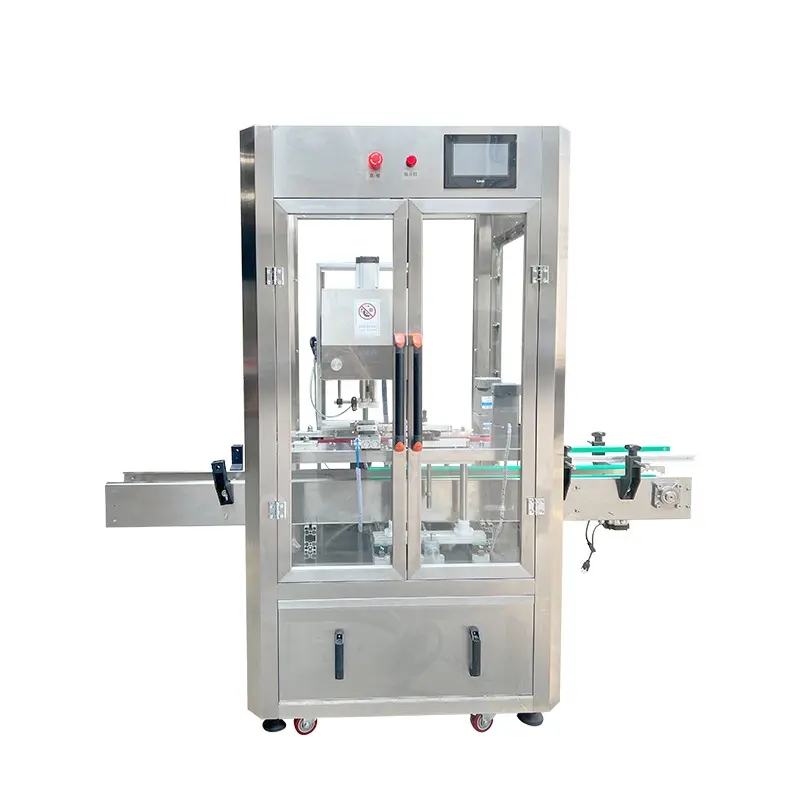
The complete workflow consists of seven closed-loop automatic procedures: bottle feeding & separating, cap sorting & feeding, bottle positioning & clamping, automatic cap placing, servo capping, defective product detection & rejection, and finished product discharging. The whole system adopts PLC photoelectric automatic induction control with no manual intervention required.
1. Bottle Feeding & Separating Procedure
Filled bottles conveyed from the front filling machine are delivered to the capping machine’s feeding conveyor at a constant speed. Limit guardrails on both sides automatically straighten the bottles to ensure linear and centered transportation. A bottle separating cylinder or screw separator divides dense bottles into individual units with uniform spacing for independent conveying. Built-in photoelectric sensors monitor the feeding status in real time. The machine suspends cap dropping and capping actions when no bottle is detected, realizing a “no bottle, no cap” anti-leakage function.
2. Cap Sorting & Feeding Procedure (Matched with Vertical Cap Sorter)
Operators pour a batch of caps into the cap storage hopper at one time. The vibrating lifting plate and sorting track perform high-speed screening to distinguish correctly oriented and reversed caps. Reversed caps automatically fall back to the hopper for re-sorting, while only qualified caps with downward sealing sides enter the cap delivery chute. A cap storage station is reserved at the end of the chute for continuous standby operation. A photoelectric missing-cap detection system triggers acousto-optic alarm and automatic shutdown to remind feeding when the hopper is empty.
3. Bottle Positioning & Clamping Procedure
When bottles reach the capping station, the blocking cylinder extends to stop bottle movement. Meanwhile, the bottom bottle supporting cylinder rises, and the bilateral bottle clamping fixtures lock the bottle body tightly and synchronously. This fully fixed positioning effectively prevents bottle slipping and rotation during the capping process. The control system only authorizes cap dropping after receiving the positioning completion signal.
4. Automatic Cap Dropping & Placing Procedure
The cap blocking cylinder at the end of the delivery chute opens, allowing a single cap to drop accurately and fit vertically on the bottle mouth. The buffered cap pressing head gently compresses the cap to avoid offset and tilting. Secondary photoelectric inspection is implemented: bottles with failed cap placement or tilted caps are marked as unqualified, skipped for capping, and automatically rejected in the subsequent procedure.
5. High-Precision Servo Capping (Core Procedure)
The servo capping head descends, and the silicone gripper firmly clamps the cap. The servo motor tightens the cap according to preset torque with real-time closed-loop torque monitoring. The servo motor stops instantly once the standard torque value is reached, effectively avoiding bottle mouth cracking and cap surface scratching caused by over-tightening. After capping, the capping head lifts, the bottle fixture releases, and the blocking cylinder retracts. Equipped with an overload protection system, the servo will automatically alarm and shut down in case of cap jamming or thread slipping to prevent equipment damage.
6. Defective Product Detection & Rejection
Multiple groups of photoelectric detectors conduct comprehensive inspection after capping, including cap presence detection and cap height detection (to judge loose capping and thread slipping). Unqualified bottles with missing caps, tilted caps or insufficient tightening are pushed out laterally by the rejection cylinder and fall into the waste collection box when reaching the rejection station, while qualified bottles pass through normally.
7. Finished Product Discharging
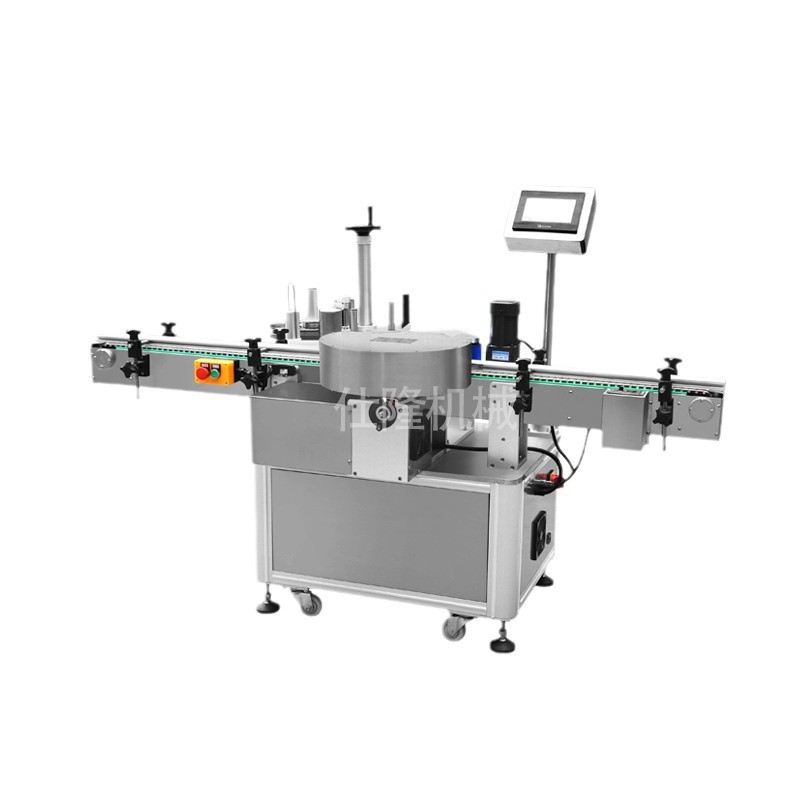
Qualified bottles return to the main conveyor and are stably transported to back-end equipment such as labeling machines and case packers, completing the closed-loop operation of the entire packaging production line.
Process Differences of Linear Roller Friction Capping Machine (Economical Type)
This model cancels the stop-and-clamp station and realizes dynamic capping during continuous bottle movement. Bottles are conveyed continuously, and the cap sorter drops caps onto the bottle mouths in real time. Two or four groups of rubber friction wheels clamp the caps from both sides and drive the caps to rotate and tighten by relying on conveying friction. The torque is controlled by spring pressure without precise servo torque adjustment. Except for the capping mode, the feeding, cap sorting, missing-cap alarm, defect detection and discharging procedures are consistent with the servo model.
Additional Procedure of Fully Automatic Vacuum Capping Machine (Special for Glass Sauce Jars)
A vacuum chamber procedure is added in the core capping step. After bottle positioning and sealing, the system extracts air from the chamber to form negative pressure, and then tightens the cap synchronously to realize vacuum sealing, which effectively prolongs the shelf life of sauces, canned food and other products.
Overall Automatic Operation Logic
All actions are centrally linked and controlled by PLC, with interlock protection of photoelectric sensors, cylinders and servo systems. It supports multiple safety mechanisms including no-bottle cap stop, missing-cap alarm, bottle jam emergency stop and torque overload protection. The equipment supports 24-hour uninterrupted linkage operation with filling production lines for continuous automatic production.
Guangzhou Shilong Machinery Equipment Co., Ltd. is a professional packaging machinery manufacturer integrating research, design, development and production. Committed to introducing advanced domestic and foreign technologies and integrating superior industry resources, we deliver customized packaging equipment with sophisticated manufacturing technology, rich industry experience and professional one-stop services. We own a complete industrial system covering independent R&D, production, sales and after-sales service.
Our core products cover full-range food and packaging machinery, including bottle washing machines, capping machines, labeling machines, sleeve labeling machines, sealing machines, emulsifiers, mixing tanks, water treatment equipment, as well as customized fully automatic and semi-automatic filling production lines. Adhering to the service tenet of strict quality control, integrity management and customer-oriented service, we are dedicated to providing customers with personalized products and all-round professional support.
We use cookies to offer you a better browsing experience, analyze site traffic and personalize content. By using this site, you agree to our use of cookies. Privacy Policy