

Industry News
 21 2026-08
Today, Shilong Machinery shares the application scenarios of the double‑head following filling machine
Core adaptation features: non‑stop bottle conveying, continuous production line, medium‑high‑speed mass production, frequent bottle‑type changeover, liquids to medium‑high‑viscosity pastes, sauces with tiny soft particles. It is suitable for full‑line continuous production and can be seamlessly connected with capping, labeling and ink‑jet coding machines.
 18 2026-08
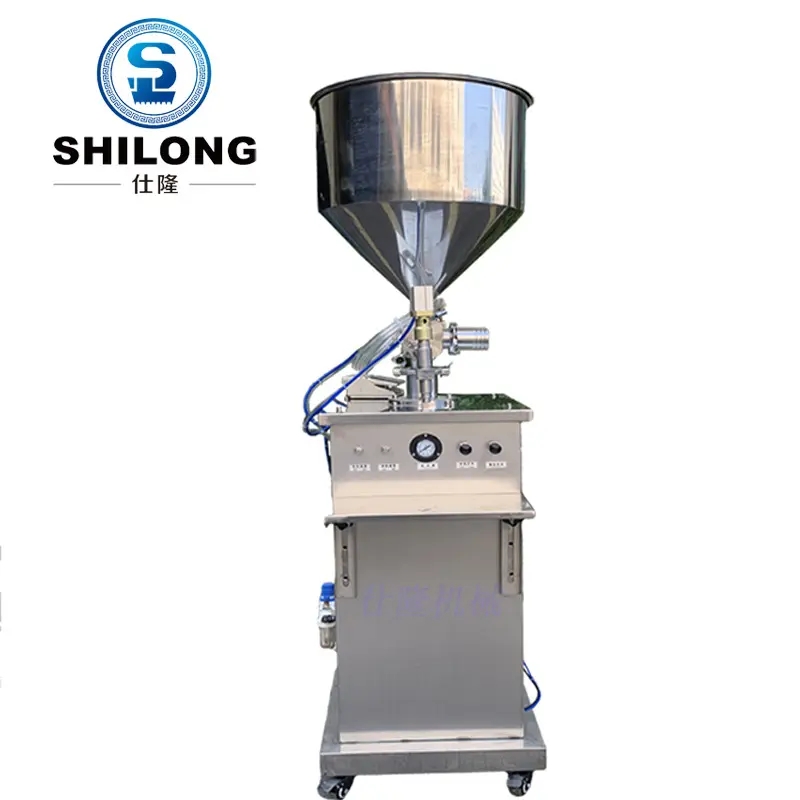
Shilong Machinery Shares Today: Industries & Materials Applicable to Liquid Premade‑Pouch Filling Machines
Liquid Premade‑Pouch Filling Machine|Applicable Industries & Material List
Packable materials: low‑viscosity liquid, medium‑high viscosity paste‑liquid, fluid with fine particles.
Suitable pouch types: stand‑up pouch, zipper pouch, spout pouch, 3‑side‑sealed pouch, 4‑side‑sealed premade pouch.
 14 2026-08
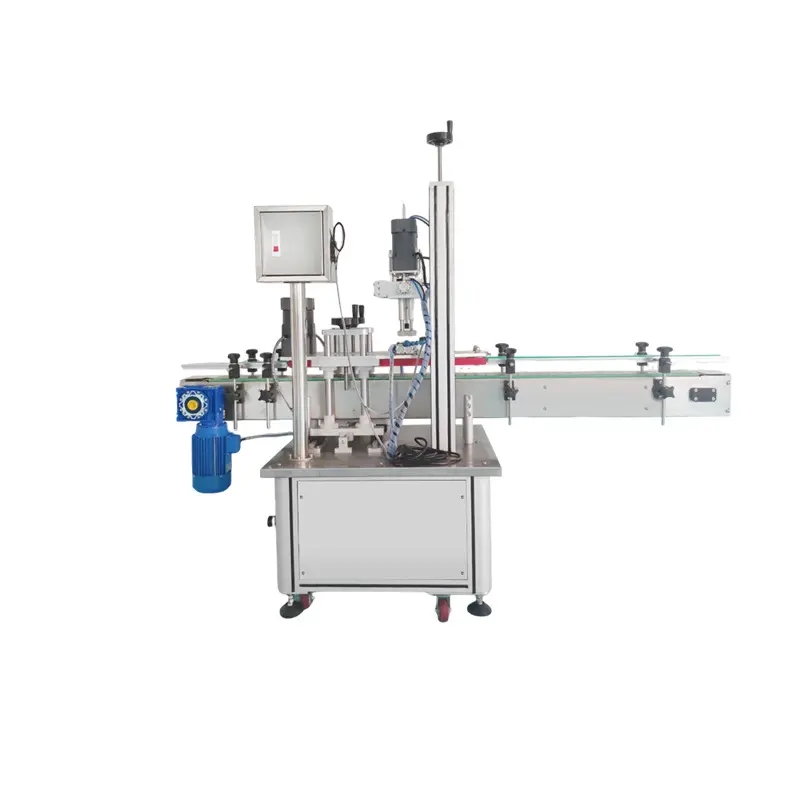
Shilong Machinery Today Shares What Are the Application Scenarios of Servo‑Piston Linear Filling Machine?
This machine adopts servopiston volumetric dosing. It is compatible with lowviscosity liquids, highviscosity pastes and granularcontaining materials with strong versatility. Below is the breakdown by industry, material, productionline working conditions and bottle types for your product introduction.
 04 2026-08
Shilong Machinery talks about the standard core configuration of fully automatic quantitative filling machines today.
1. Control System (Core Electric Control)
✅ Standard Configuration
PLC programmable logic controller
7-inch color touch screen (Chinese & English interface, multi-formula storage, output statistics, fault alarm display)
Photoelectric bottle detection sensor: No filling without bottles
Low-voltage electrical components for the whole machine (well-known domestic brands; Siemens available as upgrade option)
Emergency stop button, operation indicator light, sound & light fault alarm
Parameter encryption authority management, filling counting function
❇️ Optional Configuration
Remote communication module (for remote commissioning support)
Complete explosion-proof electric control system (for chemical solvents)
Data export function (export filling records via USB flash drive)
 31 2026-07
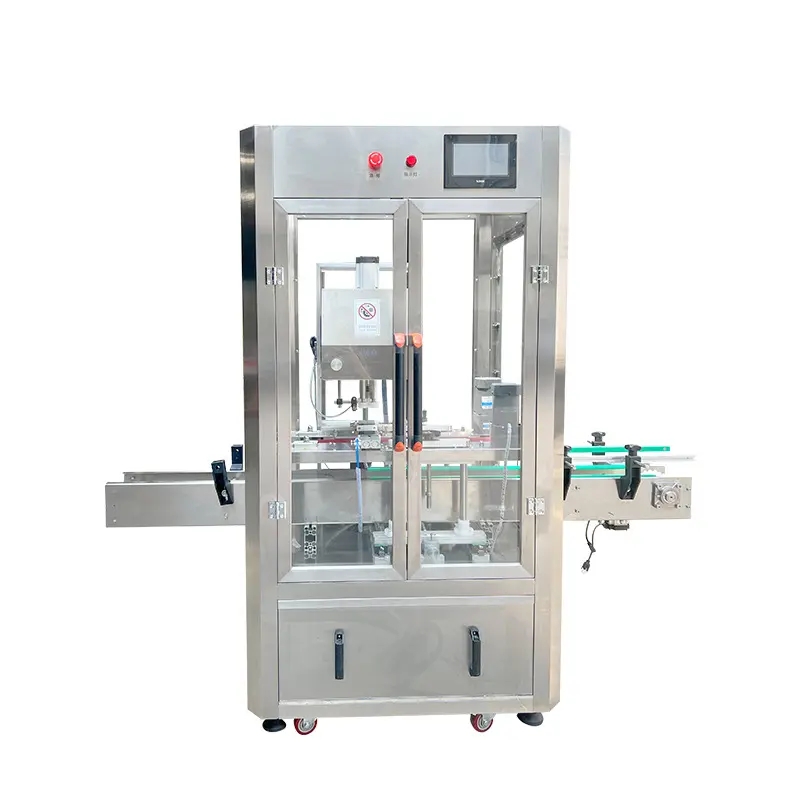
Working Principle of Automatic Capping Machine
The overall process consists of five major stages: Bottle Feeding & Conveying → Automatic Cap Sorting & Cap Placing → Bottle Positioning → Capping & Tightening → Finished Bottle Discharging.
Models with different structures share the same front-end conveying and cap sorting process. The core difference lies in the capping actuator, which will be explained separately below.
 24 2026-07
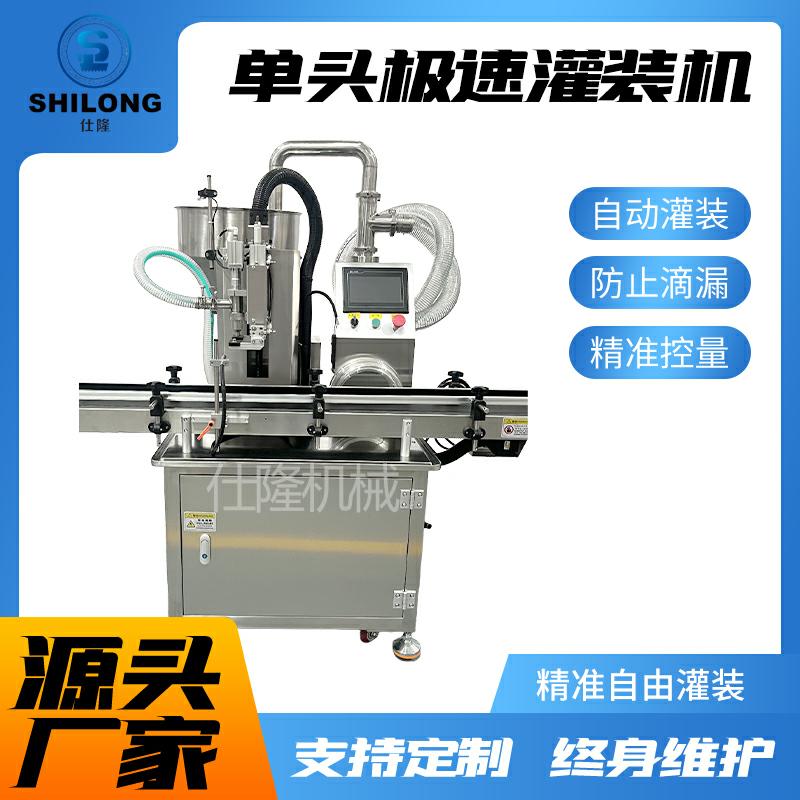
Today, Guangzhou Shilong Machinery Equipment Co., Ltd. will introduce the full working flow of our fully automatic screw capping machine.
The complete workflow consists of seven closed-loop automatic procedures: bottle feeding & separating, cap sorting & feeding, bottle positioning & clamping, automatic cap placing, servo capping, defective product detection & rejection, and finished product discharging. The whole system adopts PLC photoelectric automatic induction control with no manual intervention required.